Most job seekers assume silence means rejection.
Sometimes it does.
But more often, it means something else:
your application never made it far enough to be seriously evaluated in the first place.
That’s the frustrating part of modern hiring.
A lot of qualified candidates are not losing opportunities because they lack experience, intelligence, or work ethic.
They’re being filtered out before recruiters fully assess whether they could actually do the job.
And most of the time, they don’t even realize it’s happening.
Most Resumes Are Not Read Carefully
This is one of the biggest misconceptions in online job searching.
People imagine recruiters reviewing every resume in detail, comparing candidates thoughtfully, and weighing experience carefully.
That is not how high-volume hiring usually works.
In reality, recruiters are often reviewing:
- hundreds of applications
- multiple open roles
- tight hiring deadlines
- overloaded applicant pipelines
The first pass through resumes is usually very fast.
Recruiters are not deeply evaluating every candidate at this stage.
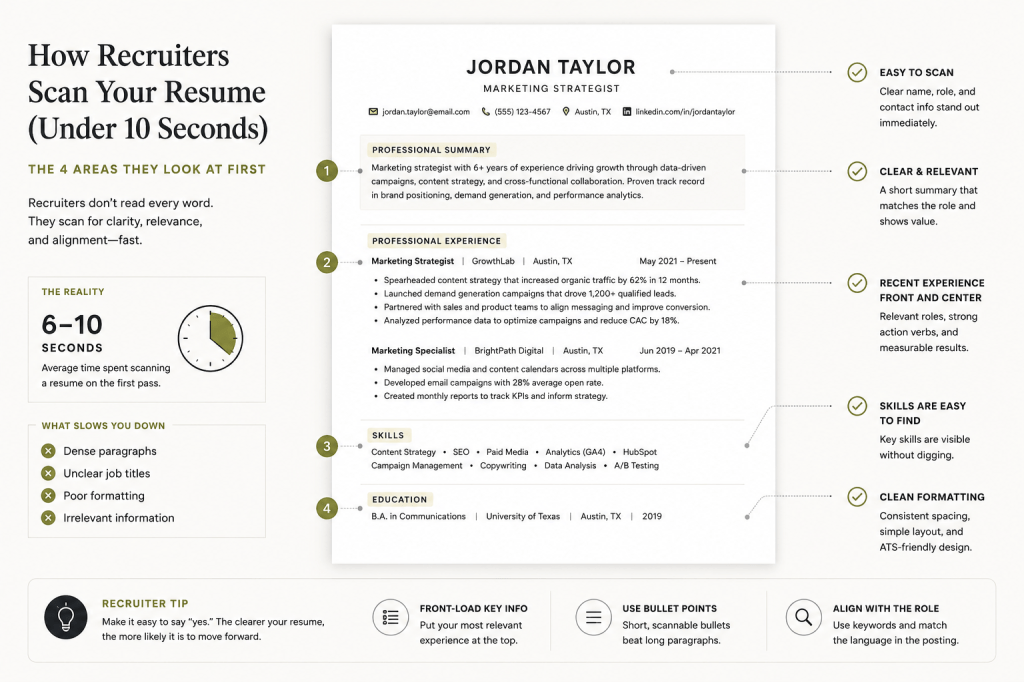
They are scanning for:
- role alignment
- clarity
- obvious relevance
- formatting consistency
- missing information
- anything that creates confusion
That scan may only last a few seconds.
This is why many qualified candidates never receive an interview request.
Not because they were “bad.”
Because the resume created too much friction too quickly.
Recruiters Are Trying To Reduce Risk
Hiring is fundamentally a filtering process.
Recruiters are not initially asking:
“Who is the most impressive candidate?”
They’re asking:
“Who looks easiest to move forward confidently?”
That changes how resumes are evaluated.
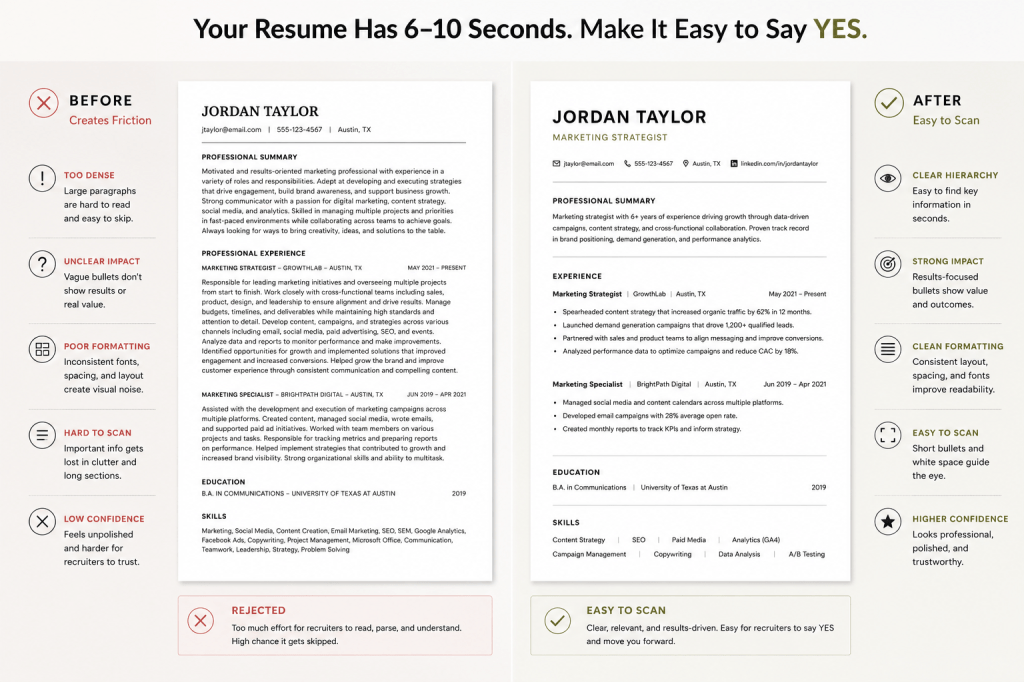
A resume that is:
- difficult to scan
- overly dense
- unclear
- inconsistent
- vague
creates hesitation.
And hesitation is dangerous during high-volume screening.
When recruiters are moving quickly, uncertainty usually leads to skipping.
The ATS Is Not The Main Problem
A lot of candidates blame ATS systems for everything.
The reality is more nuanced.
Most Applicant Tracking Systems are not automatically “rejecting” resumes the way people imagine.
They are mainly:
- organizing applications
- storing resumes
- helping recruiters search candidates
What usually hurts candidates is not the ATS itself.
It’s:
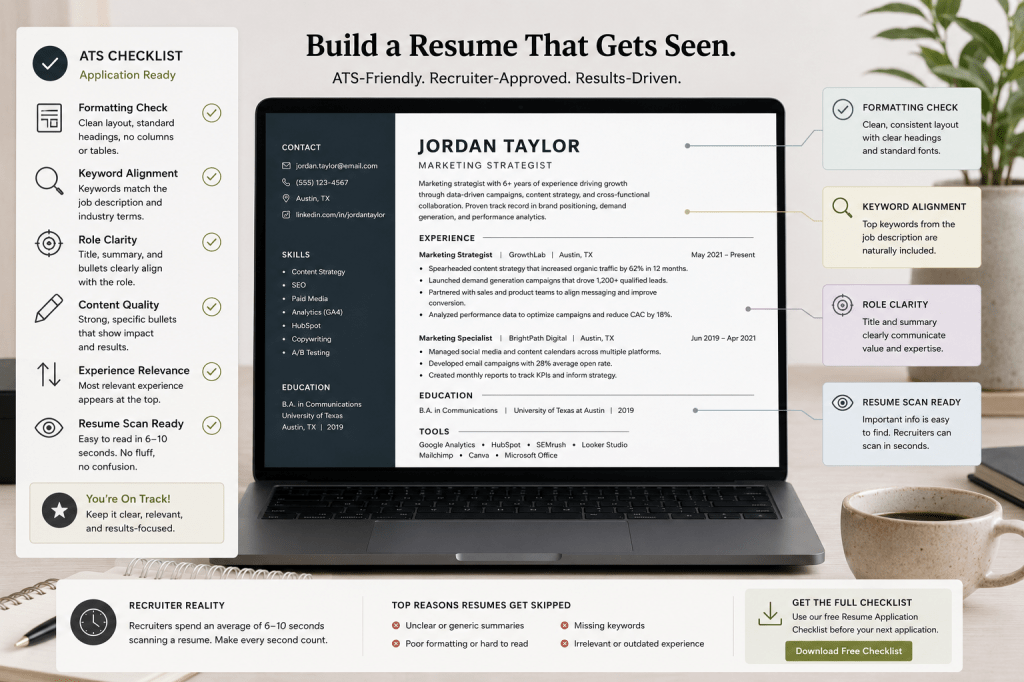
- formatting issues
- unclear job titles
- missing keywords
- confusing layouts
- inconsistent structure
- resumes that are hard to interpret quickly
The ATS is often blamed for problems that are actually resume clarity problems.
Resume Friction Quietly Kills Applications
Most resumes fail through accumulation.
Not one huge mistake.
Several small issues together create enough friction that recruiters move on.
Common examples:
- giant paragraphs
- vague summaries
- cluttered formatting
- overdesigned templates
- generic bullet points
- inconsistent dates
- irrelevant older experience
- keyword stuffing
- unclear responsibilities
None of these alone necessarily destroy an application.
But together, they slow understanding.
And slowing understanding is expensive during screening.
The “Perfect Resume” Myth Makes Things Worse
Many job seekers endlessly rewrite their resumes trying to make them “perfect.”
Ironically, this often makes resumes weaker.
Over-editing creates:
- inconsistent wording
- bloated explanations
- awkward keyword stuffing
- unclear positioning
- diluted bullets
A resume does not need to be perfect.
It needs to be:
- clear
- readable
- role-aligned
- easy to process quickly
That matters far more than sounding impressive.
Recruiters Prioritize Clarity Over Creativity
A lot of online resume advice encourages candidates to:
- stand out visually
- sound unique
- use creative formatting
- “differentiate themselves”
In practice, highly creative resumes often perform worse.
Why?
Because recruiters are not rewarding creativity during the first scan.
They are rewarding:
- speed of understanding
- role relevance
- predictable structure
- low friction
Simple resumes are often more effective than visually complicated ones.
Especially in ATS-heavy environments.
Volume Hiring Changed Everything
One major reason job searching feels harder today is volume.
Online applications made applying easier.
Which means recruiters now receive dramatically more applications than before.
For candidates, this creates a difficult reality:
small mistakes matter more because recruiters have less time per application.
This is why candidates sometimes feel invisible despite being qualified.
The issue is often not capability.
It’s whether the application survives the first filtering layer.
What Actually Helps Candidates Move Forward
The strongest resumes tend to have a few things in common:
- clear job titles
- simple formatting
- concise bullets
- easy-to-scan structure
- relevant skills
- obvious role alignment
- minimal clutter
They reduce interpretation effort.
That’s what gets resumes reviewed longer.
A Better Way To Think About Job Applications
Instead of asking:
“How do I make my resume impressive?”
Ask:
“How do I make my resume easy to evaluate quickly?”
That mindset shift changes everything.
Recruiters are not trying to make your life difficult.
They are trying to process a large amount of information efficiently.
The easier your application is to understand, the more likely it is to move forward.
Final Thoughts
If you’ve been applying consistently and hearing nothing back, it does not automatically mean you are unqualified.
Very often, qualified candidates are filtered out because:
- the resume is unclear
- the formatting creates friction
- the structure slows understanding
- the positioning is too broad
- the application looks harder to evaluate than another candidate’s
These are fixable problems.
And fixing them usually has a bigger impact than endlessly rewriting your experience.
Before your next application, slow down and review the details most candidates overlook.
Use the free Resume Application Checklist before your next application.
 thediyjobsystem
Leave a comment